Blacktop is a common term for asphalt pavement, named for the dark black color of the finished surface. While the terms are frequently used interchangeably in everyday conversation, blacktop specifically refers to asphalt concrete, a mixture of aggregate materials like crushed stone and sand bound together with asphalt cement, a petroleum-based binder. Understanding what Blacktop Paving Woonsocket is made of and how it’s installed helps property owners in Woonsocket better evaluate paving proposals and understand what to expect from a finished project.
The Composition of Blacktop
Blacktop asphalt is engineered from a specific combination of materials designed to balance durability with flexibility. The primary components include:
- Aggregate. This is the bulk of the mixture, typically composed of crushed stone, gravel, and sand in carefully calculated proportions. The size and gradation of the aggregate significantly affects the strength and texture of the finished surface.
- Asphalt cement. This petroleum-derived binder holds the aggregate together and gives blacktop its characteristic black color and flexible properties. It’s heated during the mixing and application process to achieve proper workability.
- Additives. Depending on the intended use and local climate, additional materials may be incorporated to improve durability, adjust curing time, or enhance resistance to specific stresses like heavy traffic or extreme temperature swings.
The specific mix design used for a given project depends on its intended use. A residential driveway typically uses a different aggregate blend than a commercial parking lot designed to handle heavier, more frequent traffic.
How Blacktop Paving Is Installed
The installation process for blacktop follows a fairly consistent sequence, regardless of the size of the project:
- Surface preparation. Existing material, whether old pavement, gravel, or soil, is removed or prepared to create a stable, properly graded foundation.
- Base construction. A layer of compacted aggregate base is installed beneath the asphalt to provide structural support and facilitate drainage.
- Asphalt application. Hot-mix asphalt, typically produced at a specialized facility and delivered while still hot, is spread evenly across the prepared base using paving equipment.
- Compaction. Heavy rollers compact the asphalt while it’s still warm and pliable, achieving the density needed for long-term durability.
- Curing. The surface cools and hardens over the following days and weeks, gradually reaching its full strength.
Why Temperature Matters During Installation
Blacktop paving is a temperature-sensitive process. Asphalt needs to be installed while it’s still hot enough to be workable and to compact properly, which is why paving projects are generally scheduled during warmer months in climates like Rhode Island’s. Installing asphalt in temperatures that are too cold can prevent proper compaction, leading to a weaker, more porous surface that’s prone to premature cracking and water infiltration.
Blacktop’s Performance in New England Climates
Rhode Island’s seasonal weather, with its combination of hot summers, cold winters, and repeated freeze-thaw cycling, places specific demands on blacktop pavement. The flexibility that makes asphalt well-suited to this climate is also what allows it to expand and contract with temperature changes without cracking as readily as more rigid paving materials. That said, a properly compacted base and adequate surface thickness remain essential for blacktop to perform well through New England winters, since even flexible asphalt can develop cracks if water infiltrates gaps in an inadequately prepared base.
Common Questions About Blacktop Paving
What’s the difference between blacktop and regular asphalt?
There isn’t a meaningful technical difference. Blacktop is simply a colloquial term for asphalt pavement, referring to the same aggregate-and-binder mixture used in most paved driveways, parking lots, and roads.
How long does blacktop typically last?
With proper installation and routine maintenance, including sealcoating and prompt crack repair, blacktop pavement can last several decades. Lifespan varies considerably based on traffic volume, climate exposure, and how consistently maintenance is performed.
Why does new blacktop look different from older pavement?
Freshly installed blacktop has a deep black color due to the asphalt cement binder. Over time, exposure to sunlight and weather causes the surface to oxidize and fade to a grayish color, which is one of the visual cues that sealcoating may be due.
Can blacktop be installed in any season?
Installation is generally most successful during warmer months when ambient temperatures allow the asphalt to remain workable long enough for proper compaction. Cold-weather paving is sometimes possible with specialized techniques, but it carries a higher risk of compaction issues that can shorten the pavement’s lifespan.
The Role of Compaction Testing
Achieving proper compaction density is one of the more technical but important steps in a blacktop installation, since undercompacted asphalt is more porous and susceptible to water infiltration and premature wear. Paving crews often use density testing methods during installation to confirm that the required compaction level has been reached, rather than relying solely on visual inspection. This kind of quality control step, while not visible in the finished surface, plays a direct role in how long the pavement holds up under years of traffic and seasonal weather exposure.
How Aggregate Selection Affects Blacktop Texture and Performance
The size and type of aggregate used in a blacktop mix influences more than just appearance. Finer aggregate blends tend to produce a smoother surface texture, often preferred for driveways and areas where a polished appearance matters, while coarser aggregate blends can offer improved skid resistance, a consideration for areas with steeper grades or higher vehicle speeds. Regional availability of aggregate materials also plays a practical role, since paving suppliers typically source aggregate from nearby quarries, meaning the specific characteristics of local blacktop can vary somewhat from one region to another based on what materials are readily available.
Recognizing Quality Blacktop Work
Not all blacktop installations are created equal, and a few visual and practical indicators can help property owners assess the quality of finished work. A properly installed surface should have a smooth, consistent texture without visible tears or uneven compaction, be free of standing water after rainfall, thanks to proper grading and drainage, and have clean, well-defined edges where the pavement meets curbs, walkways, or landscaping. These details often reflect the care taken during both the preparation and installation phases of the project.
Maintaining Blacktop Over Time
Like any paved surface, blacktop benefits from regular maintenance to maximize its lifespan. Sealcoating every few years protects against UV damage and chemical exposure, while prompt attention to small cracks prevents water infiltration that can undermine the base beneath the surface. In climates with harsh winters, being mindful of how de-icing materials and snow removal equipment interact with the pavement also helps preserve its condition over time.
Blacktop Compared to Concrete
Property owners choosing between blacktop and concrete for a driveway or parking lot often weigh several practical differences. Blacktop tends to be faster to install and, because it’s more flexible, generally handles freeze-thaw stress with fewer visible cracks than rigid concrete, which can develop distinct fracture lines when it fails. Concrete, on the other hand, often lasts longer overall in stable climates and doesn’t require the periodic sealcoating that blacktop does, though it typically requires a longer curing period before it can bear vehicle weight and tends to show cracks more visibly since it doesn’t flex the way asphalt does. In Rhode Island’s freeze-thaw climate, blacktop’s flexibility is often cited as a practical advantage, though the right choice ultimately depends on the specific application, appearance preferences, and how the surface will be used.
The Equipment Behind a Blacktop Installation
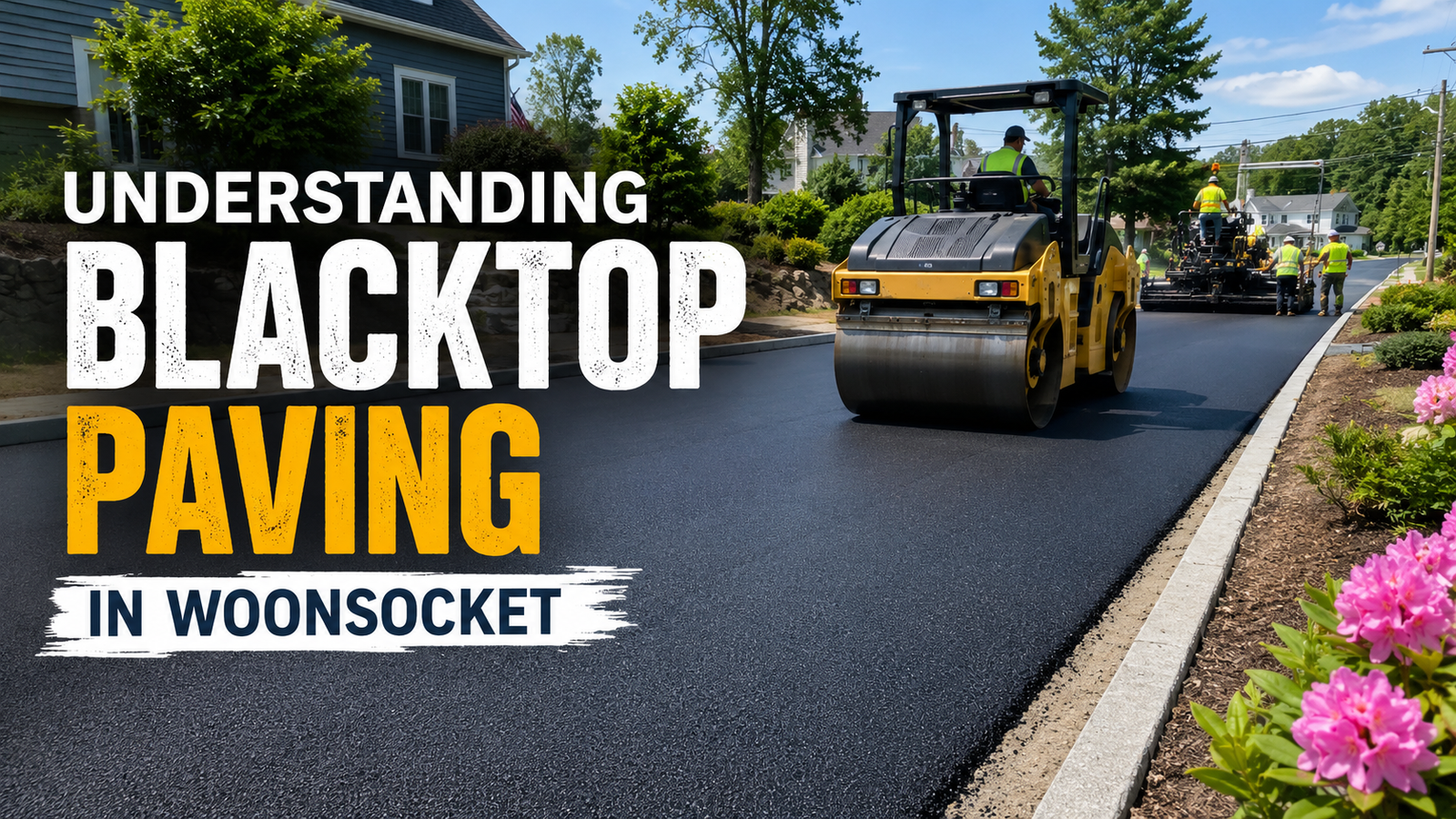
A blacktop paving project relies on specialized equipment at each stage of the process. Excavation equipment removes existing material and shapes the subgrade, while compaction equipment, ranging from plate compactors for smaller areas to heavy rollers for larger surfaces, achieves the density needed in the base layer. During asphalt application, a paver machine spreads the hot mix at a consistent, controlled thickness, followed immediately by rollers that compact the material while it’s still warm enough to bond properly. The coordination between these pieces of equipment, and the timing of each step relative to the asphalt’s temperature, plays a significant role in how well the finished surface performs.
Understanding Asphalt Aging and Oxidation
Over time, even well-installed blacktop undergoes a natural aging process as it’s exposed to sunlight, oxygen, and weather. This process, known as oxidation, causes the asphalt binder to gradually harden and lose some of its original flexibility, which is part of why older pavement becomes more prone to cracking under stress that it would have handled without issue when newly installed. Sealcoating helps slow this oxidation process by creating a protective barrier between the asphalt surface and UV exposure, which is one of the main reasons it’s recommended as a routine maintenance practice rather than a purely cosmetic treatment.
Final Thoughts on Blacktop Paving
Blacktop remains one of the most widely used paving materials for residential and commercial properties alike, thanks to its combination of durability, flexibility, and relatively efficient installation process. Understanding the materials, installation steps, and climate considerations involved gives property owners in Woonsocket a clearer picture of what quality blacktop paving in Woonsocket actually requires, and what to look for when evaluating a finished project or planning a new one.